
Private channels in Microsoft Teams are now launched and rolled out to your tenant. You can create private channels for a specific group of team members in a team. Only those people that are added to the private channel will be able to see and write messages in it.
In my previous blog post “Private channels in Microsoft Teams are here but are you ready to release it in your organization yet?” i wrote about what to think of in order to start using it properly.
Have you informed your users about your guidelines for using this Private channels? If you haven’t done so, now is the time to do it. In the meantime, you can (read: should) disable Private Channels for a time until everyone knows how it works and how to use it.
How do you do this then? It is easier than you think:
- Open Microsoft Teams admin center and select Teams policies.
- Open the policy
- Turn off the “Create private channels” setting.
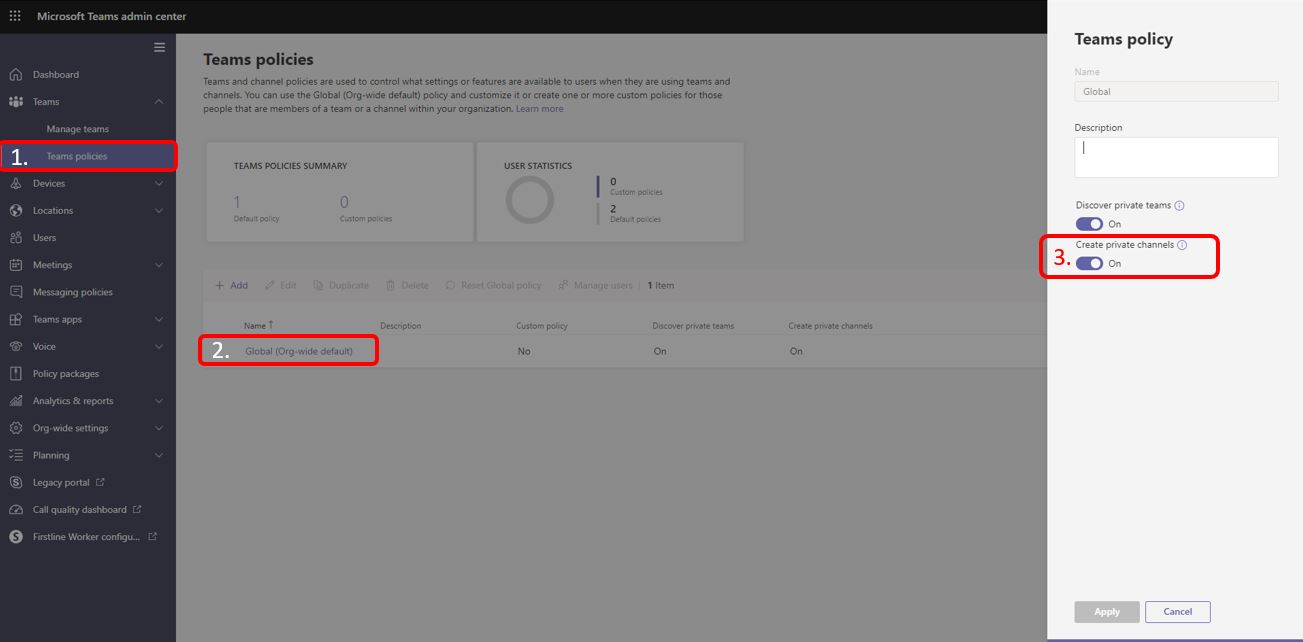
Once your users have received (and understood) the information they need, you just go in and activate it again.
Additional great reading about Private channels
- Private Channels Survival Guide (by Vesa Nopanen)
- Everything you need to know about Private Channels in Microsoft Teams (by Matt Wade)
- Teams Private Channels Best Practices (by Dr. Nitin Paranjape)






 Providing Tips
Leave a comment